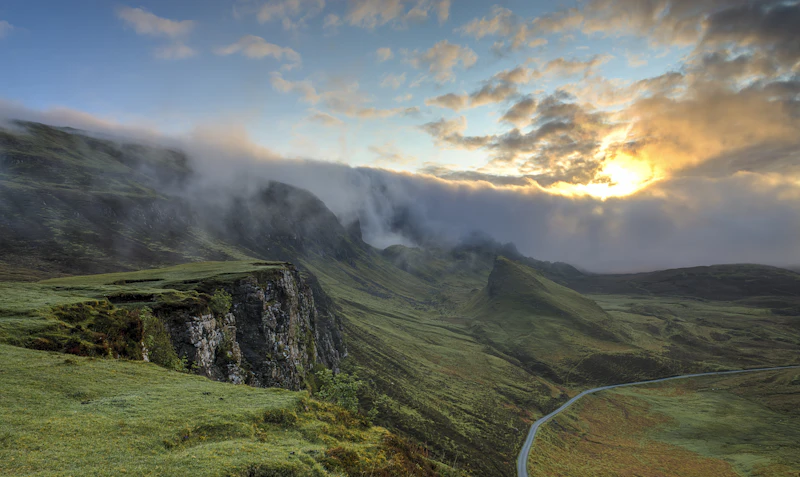
Myth vs. Reality: Demystifying the Misty Isle
The Isle of Skye is frequently depicted in travel brochures as an untouched, serene paradise where lonely bagpipers play against a backdrop of empty, dramatic cliffs. While the landscape remains undeniably spectacular, the reality of modern tourism requires a practical approach. According to VisitScotland, Skye is one of the most visited regions in the country, leading to congested single-track roads and fully booked accommodations during peak summer months. Finding solitude requires careful timing, strategic planning, and a willingness to explore beyond the classic Instagram viewpoints.
Another common myth is that Skye is perpetually inaccessible due to extreme weather. While the island does experience its fair share of Atlantic depressions, the weather is incredibly localized. It can pour rain in Portree while the sun shines brightly over the Neist Point cliffs. Armed with high-quality waterproof layers and a flexible mind, travelers can experience Skye's dramatic beauty in all conditions.
Quick Answer: Is the Isle of Skye Right for You?
Choose the Isle of Skye if:
- ✓ You crave dramatic, jagged volcanic geology and world-class coastal hikes.
- ✓ You want to explore deep Clan histories and well-preserved medieval castles.
- ✓ You enjoy scenic, slow-paced road trips on winding single-track roads.
Choose an alternative (like the Isle of Mull or Arran) if:
- ✗ You prefer vibrant nightlife, urban convenience, and short travel times.
- ✗ You are uncomfortable driving on narrow, single-lane roads with passing places.
- ✗ You prefer sunny, predictable beach climates.
Best For: Active Hikers, History Buffs, Road-trippers, and Photography Enthusiasts.
At-a-Glance Travel Summary
- Who is this destination best for? Outdoor adventurers, landscape photographers, and history enthusiasts eager to explore medieval ruins.
- How much does it cost? A mid-range budget averages £150–£250 per day for two people, including car rental, mid-range B&B accommodation, and pub meals. See our comprehensive Scotland budget guide for a deeper breakdown.
- When should you visit? May to September offers the longest daylight hours and the best chance of dry weather, though May and September balance lower crowd sizes with manageable midge levels.
- What are the main pros and cons? Pros: Breathtaking volcanic topography, rich Gaelic culture, and iconic castles. Cons: Severe peak-season overcrowding, unpredictable Atlantic weather, and aggressive midges.
- How safe is it? Extremely safe with exceptionally low crime rates. The primary safety concerns are environmental: slippery cliff edges, sudden mountain mist, and narrow roads.
Destination Comparison: Isle of Skye vs. Isle of Mull
To help you decide if Skye is the right fit for your Scottish island adventure, here is how it compares directly to its southern neighbor, the Isle of Mull, based on standard travel metrics.
| Category | Isle of Skye | Isle of Mull | Winner |
|---|---|---|---|
| Accommodation | High demand, premium prices; requires booking months ahead. | Slightly more relaxed booking window; colorful guesthouses. | Isle of Mull |
| Food | World-class seafood, fine dining, and craft distilleries. | Excellent local seafood, local cheese, and cozy pubs. | Isle of Skye |
| Nightlife | Traditional music sessions in Portree and Broadford pubs. | Quiet evenings centered around Tobermory's historic pubs. | Isle of Skye |
| Public Transport | Limited Stagecoach buses; car rental highly recommended. | Sparse local buses; heavily reliant on ferry schedules. | Isle of Skye |
| Visa | UK Visa rules apply. Check our Scotland visa guide. | UK Visa rules apply. | Tie |
| Weather | Highly volatile, fast-moving Atlantic rain and mist. | Slightly wetter, but marginally milder maritime climate. | Tie |
| Walkability | Incredible, well-marked but steep and rugged mountain trails. | Gentler coastal walks, with some challenging peaks like Ben More. | Isle of Skye |
| Internet | 4G in towns; completely dead zones in deep glens. | Decent in Tobermory; highly spotty elsewhere. | Isle of Skye |
| Safety | Virtually no violent crime; primary danger is mountain terrain. | Extremely safe, close-knit island community. | Isle of Mull |
| Remote Work | Workable from Portree cafes; rural cottages lack speed. | Challenging; limited high-speed infrastructure. | Isle of Skye |
| Language | English widely spoken; strong Gaelic heritage and signage. | English spoken; minor Gaelic cultural visibility. | Isle of Skye |
| Family | Great for active teenagers, but trails can be too steep for toddlers. | Excellent for younger kids with beaches and wildlife boat trips. | Isle of Mull |
| Senior Travelers | Challenging terrain; scenic driving routes provide comfort. | More accessible coastal walks and flatter terrain. | Isle of Mull |
| Solo Travelers | Fantastic hostel scene in Portree; easy to meet hikers. See solo travel in Scotland. | Very quiet; fewer social hubs for solo wanderers. | Isle of Skye |
| Couples | High drama romantic vistas, boutique cabins, luxury seafood. | Quiet, intimate, charming coastal escapes. | Isle of Skye |
Key Destination Metrics & Practical Essentials
- Pros & Cons:
- Pros: Spectacular, unique landscapes; rich archaeological sites; world-class hiking; excellent dining.
- Cons: High tourist density; expensive summer accommodations; notoriously bad midges; unpredictable rainfall.
- Best Time to Visit: May to June (best combination of dry weather, long daylight hours, and fewer midges). July and August are the peak crowd months.
- Budget: Mid-range travelers should plan for £150 to £250 per day for two people. Budget travelers using hostels and self-catering can manage on £60 to £90 per day.
- Safety: Extremely safe. Mountain safety is the key priority. Always check weather forecasts via the UK Met Office before hiking.
- Visa: Part of the United Kingdom. Citizens of the EU, US, Canada, Australia, and New Zealand do not require a visa for stays up to 6 months.
- Weather: Maritime and highly changeable. Average summer highs hover around 15°C to 17°C (59°F to 63°F), while winter highs average 6°C (43°F). Rain is common year-round.
- Currency: Great British Pound (GBP, £). Contactless card payment is accepted almost everywhere, including remote pubs, though carrying £20 in cash is smart for emergency parking meters.
- Transport: Car rental is highly recommended to follow this Isle of Skye itinerary efficiently. Public buses exist but are infrequent and do not reach trailheads at optimal times.
- Duration: 3 Days is the absolute minimum required to see the primary highlights without rushing. 5 Days allows for a more relaxed pace.
- Internet: 4G is reliable in major settlements (Portree, Broadford, Dunvegan). Expect complete signal loss when hiking in deep glens like Glen Brittle or the Quiraing.
- Power Plug: Type G (three-pin UK plug), operating on 230V and 50Hz.
- Emergency Numbers: Dial 999 (or 112) for police, ambulance, fire, or Coastguard/Mountain Rescue.
Day 1: The Trotternish Peninsula — Volcanic Giants and Ruined Fortresses
The Trotternish Loop in the northern part of Skye contains some of the most iconic geological formations in the British Isles, created by a massive series of ancient landslips.
Morning: Hiking the Old Man of Storr
Begin your day early to beat the tour buses. Aim to arrive at the Storr car park (located along the A855, roughly 10 minutes north of Portree) by 7:30 AM. The car park operates on a pay-and-display system managed by the Highland Council, costing £6 for up to 3 hours.
The hike up to the base of the Old Man of Storr is a 3.8-kilometer (2.4 miles) out-and-back trail with an elevation gain of approximately 250 meters. The path has been heavily upgraded with gravel steps, but it remains steep. As you climb, the towering 48-meter basalt pinnacle looms larger. For the best views, continue past the main needle to the higher viewing platforms to capture the classic vista of the Storr overlooking the Sound of Raasay. To avoid the worst of the crowds, check our guide on Isle of Skye tourist traps and how to bypass them.
Midday: Lealt Falls, Kilt Rock, and Staffin Beach
Drive north along the A855 coastal road. Your first stop is Lealt Falls, where a dramatic viewing platform projects over a deep gorge carved by the Lealt River. Continue north for 5 minutes to reach Kilt Rock and Mealt Falls. Here, the basalt columns resemble the pleats of a Scottish kilt, and Mealt Falls plunges 55 meters directly over the sea cliffs into the ocean below.
Next, stop at An Corran Beach in Staffin. At low tide, you can find genuine fossilized dinosaur footprints preserved in the flat shale rocks. These prints, left by ornithopods and theropods approximately 170 million years ago, are a fascinating window into the island's Jurassic history.
Afternoon: Braving the Quiraing Loop
From Staffin, take the narrow, single-track road heading inland toward Uig to reach the Quiraing. This is arguably the most breathtaking landscape in Scotland. The Quiraing is an active landslip, meaning the ground shifts slightly every year. Parking here is limited and costs £6 for 3 hours.
The full Quiraing circuit is a challenging 6.8-kilometer (4.2 miles) loop that takes roughly 3 to 4 hours to complete. It involves traversing narrow, rocky paths along steep drops. If you are short on time or hiking with less experienced companions, simply walking the first 1.5 kilometers to the base of the massive rock structures known as "The Prison" and "The Needle" offers immense visual rewards without requiring the full, strenuous loop. Ensure you are wearing high-quality hiking boots; this trail is one of the best hikes in Scotland but can be treacherous in wet weather.
Late Afternoon: The Ruins of Duntulm Castle
Continue around the tip of the peninsula to the dramatic ruins of Duntulm Castle, perched precariously on a basalt cliff edge. Built in the 14th and 15th centuries, this was once the formidable stronghold of the Macdonalds of Sleat. The castle was abandoned in 1732 when the family moved to Armadale. Today, it stands as a haunting ruin. Access to the interior is restricted due to falling masonry risks, but the exterior walk offers spectacular coastal views across the Minch to the Outer Hebrides.
Day 2: Castles, Cliffs, and Coasts — The Wild West Coast
Day two focuses on the historic seat of Clan MacLeod, unique geological beaches, and the most westerly point of the island.
Morning: Dunvegan Castle & Gardens
Drive west from Portree toward the village of Dunvegan. Dunvegan Castle is the ancestral home of the Chiefs of Clan MacLeod, having been continuously inhabited by the family for over 800 years. The castle houses invaluable clan relics, including the legendary Fairy Flag (Am Bratach Sith), a silk banner said to have miraculous powers in battle, and the Dunvegan Cup, a medieval ceremonial drinking vessel.
Tickets for the castle and gardens cost approximately £19 per adult. Spend at least two hours exploring the beautifully restored state rooms, the dungeons, and the manicured formal gardens, which contrast sharply with the wild moorlands surrounding them.
Midday: The White Sands of Claigan Coral Beach
Just 10 minutes north of Dunvegan lies Claigan Coral Beach. Park at the end of the single-track road and enjoy an easy, flat 1.8-kilometer (1.1 miles) walk along the shores of Loch Dunvegan. Despite its name, the beach is not actually made of coral, but rather of bleached skeletons of maerl, a calcified seaweed that grows locally.
On a sunny day, the white maerl reflects the light, turning the shallow water a vivid tropical turquoise. It is a peaceful, stunning location that feels completely distinct from the dark volcanic rock found elsewhere on Skye.
Late Afternoon to Sunset: Neist Point Lighthouse
Prepare for a slow, 45-minute drive from Dunvegan along a winding, single-track road to reach Neist Point. This is Scotland's most westerly point on Skye, famous for its dramatic sea cliffs and iconic lighthouse designed by David Alan Stevenson in 1909.
The walk down from the car park to the lighthouse is short (around 1.3 kilometers each way) but exceptionally steep, descending concrete steps that will test your knees on the way down and your lungs on the way back up. The cliffs here are highly dramatic and unsafe in high winds or thick fog. On a clear evening, this is the premier sunset spot on the island, where you can watch the sun sink below the horizon of the Western Isles while looking out for minke whales, basking sharks, and dolphins in the waters below.
Day 3: The Dramatic South — Fairy Pools, Cuillin Peaks, and Sea Lochs
Your final day explores the dramatic, jagged peaks of the Black Cuillin, crystal-clear mountain pools, and historic coastal routes.
Morning: Swimming and Hiking at the Fairy Pools
Located in Glen Brittle, at the foot of the Black Cuillin mountains, the Fairy Pools are a series of cold, crystal-clear rock pools and waterfalls fed by mountain streams. Arrive by 8:00 AM to secure a spot in the community-run forest car park (£6 parking fee).
The walk to the pools is a straightforward 2.4-kilometer (1.5 miles) round-trip on a well-graded gravel path, though it requires crossing several small stepping-stone streams. The water is incredibly clear, showing off vibrant blues and greens against the dark basalt rocks. Brave travelers often bring wetsuits or swimsuits for a cold-water dip in the famous natural stone arch pool. For those traveling solo, this is an incredibly popular spot to connect with others; see our guide on solo travel in Scotland for more community-driven tips.
Midday: Talisker Distillery and Carbost
After your hike, drive 15 minutes north to the village of Carbost on the shores of Loch Harport. This is home to Talisker Distillery, the oldest operating distillery on the Isle of Skye, established in 1830. Talisker is famous for its heavily peated, smoky, and maritime-influenced single malt whiskies.
It is absolutely essential to book distillery tours weeks in advance via their official booking portal. If you are driving, request a "driver's dram" pack so you can safely enjoy your whisky tasting at your accommodation later in the evening. For lunch, stop by the nearby Oyster Shed, a rustic hillside shack serving fresh local oysters, lobster, and hot crab wraps at incredibly reasonable prices. Sample some of the finest Isle of Skye street food right here.
Afternoon: Elgol and the Heart of the Cuillins
For your final afternoon, drive south toward Broadford, then turn off onto the B8083 road to Elgol. This 23-kilometer single-track road is one of the most scenic drives in Scotland, winding past the dramatic Red Cuillin hills and along the shores of Loch Slapin.
Elgol itself is a tiny, remote fishing hamlet offering unparalleled views across Loch Scavaig to the jagged ridge of the Black Cuillin. From the harbor, take a fast boat trip with local operators like Misty Isle Boat Trips to Loch Coruisk, a freshwater loch nestled directly in the heart of the mountains. This boat trip offers a fantastic chance to spot harbor seals basking on the rocks and golden eagles soaring over the peaks.
History vs. Legend on the Isle of Skye
The Isle of Skye is deeply steeped in folklore, where geological anomalies are often explained by tales of giants, fairies, and ancient clan battles. It is vital to separate these rich oral traditions from historical facts to fully appreciate the island's heritage.
| Location | The Legend / Folklore | The Historical & Scientific Reality |
|---|---|---|
| The Fairy Pools | The pools were believed to attract mythical Selkies (seal-people) who would shed their skins to bathe in the crystal-clear waters under the full moon. | These pools are glacial meltwater channels carved out of volcanic basalt and gabbro rocks over thousands of years of erosion. |
| The Fairy Flag (Dunvegan) | The flag was given to a MacLeod chief by his fairy wife as a protective talisman, promising to save the clan from disaster three times when waved. | Textile experts date the silk to between the 4th and 7th centuries AD, likely originating from Syria or Byzantium, brought back during the Crusades. |
| The Old Man of Storr | The rock pinnacle is the thumb of a dead giant who lived in the Trotternish area, buried under the earth with only his finger remaining visible. | A massive geological landslip left a vertical column of ancient basalt standing while the surrounding softer rock eroded away. |
Safety and Respect Note: Many of these locations, particularly old graveyards, castle ruins, and standing stones, hold deep cultural significance. Travelers are urged to follow the Scottish Outdoor Access Code, leave no trace, and avoid climbing on fragile structural ruins or entering sacred sites after dark.
Visual Route and Practical Planning Guides
To help visualize your journey and organize your logistics, refer to these structured planning graphics below.
Hyper-Local Insights: How to Outsmart the Crowds
- Midge Survival Tactics: The Highland midge (a tiny biting insect) can ruin an outdoor experience from June to August. They are most active on warm, humid, windless days. Always buy "Smidge" (a local Picaridin-based repellent available in Portree pharmacies) or AVON Skin So Soft, which locals swear by. Wind is your best friend: midges cannot fly in wind speeds above 6 mph.
- Single-Track Road Etiquette: Skye's rural roads are mostly single-track with designated "Passing Places" marked by white diamonds or square signs. Always pull over to the left if the passing place is on your left. If it is on your right, pause opposite it to let oncoming traffic pass. Crucially, check your mirrors frequently; if cars are lining up behind you, pull into a passing place on the left to let them overtake. Local residents have commutes, medical appointments, and deliveries to make.
- Dining Logistics: Restaurants on Skye are highly limited compared to the volume of summer visitors. Walk-ins are almost impossible in July and August. Book your dinner reservations at least 4 to 6 weeks in advance, especially for popular spots like the Loch Bay Restaurant (Stein) or the Three Chimneys (Colbost).
Frequently Asked Questions
Is the Isle of Skye cheaper than other Scottish islands?
No. Due to its massive popularity, Skye is generally more expensive than other Scottish islands like Arran or the Outer Hebrides, especially regarding accommodation and car rentals. Dining out costs are comparable to Edinburgh prices. For ways to save money, see our comprehensive Scotland budget guide.
Can you visit the Isle of Skye without renting a car?
While possible, it is highly challenging. Public transport is operated by Stagecoach, but buses are geared toward school routes and connecting local villages rather than tourist sights. You will spend a significant amount of time waiting at bus stops, and you will miss out on remote areas like Neist Point or Elgol. If you must travel without a car, booking an organized multi-day tour from Edinburgh or Inverness is highly recommended. Learn more about transit logistics in our guide to Edinburgh to Isle of Skye transport.
How bad are the midges on the Isle of Skye?
Midges can be extremely dense and frustrating from mid-June through August, particularly on damp, windless mornings and evenings near water or wet moorlands. They do not transmit diseases, but their bites are itchy and irritating. Wearing a fine-mesh midge head net and using localized repellents is highly effective.
Are the roads on Skye dangerous to drive?
The roads are not inherently dangerous, but they require high concentration. The main A-roads (A87, A855) are double-lane and well-paved, but the secondary roads leading to iconic spots like the Quiraing, Neist Point, and Elgol are narrow single-track roads with passing places. Drive slowly, watch for sheep roaming freely on the roads, and never park in a passing place.
Editorial Methodology & Trust
Last Updated: July 2, 2026
Every Shaivio guide is created through editorial research using publicly available information from official tourism authorities, transportation providers, government resources, and other reliable references where applicable. Our editors review and update content regularly to improve accuracy and usefulness. Shaivio does not accept paid placements or sponsored rankings in editorial content. Because travel information can change, we recommend verifying critical details with the relevant official source before traveling.