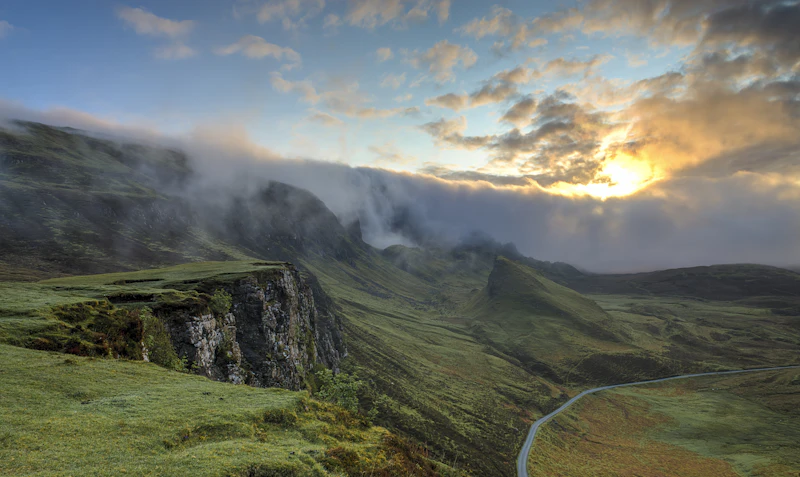
Switzerland by Train: The Ultimate 5-Day Panoramic Rail Itinerary
Switzerland's railway system isn't just a mode of transport; it's a meticulously engineered gateway to some of Europe's most spectacular scenery. For travelers seeking an immersive experience without the hassle of driving, a 5-day panoramic rail itinerary offers an unparalleled adventure. This guide cuts through the noise, providing a detailed, actionable plan to navigate the country's most scenic routes, from the shimmering lakes of Lucerne to the majestic Matterhorn.
Quick Answer: Who Should Choose This Swiss Rail Itinerary?
This 5-day Swiss Panoramic Rail Itinerary is ideal for:
- ✓ First-Time Visitors: Covers major highlights efficiently.
- ✓ Scenic Enthusiasts: Prioritizes breathtaking views over deep dives into individual cities.
- ✓ Couples & Families: Offers comfort and convenience for all ages, with minimal transfers.
- ✓ Digital Nomads & Remote Workers: Excellent connectivity and comfortable train travel for working on the go.
- ✓ Senior Travelers: Accessibility and ease of navigation are paramount.
- ✓ Solo Travelers: Safe, efficient, and allows for flexible exploration.
Choose Switzerland by Train if you value: Stunning Landscapes Punctual & Efficient Travel Comfort & Relaxation Eco-Friendly Exploration.
Myth vs. Reality: Swiss Train Travel
Before diving into the itinerary, let's address some common misconceptions about exploring Switzerland by train:
| Category | Myth | Reality |
|---|---|---|
| Cost | Swiss trains are astronomically expensive, making them inaccessible for budget travelers. | While not cheap, strategic use of Swiss Travel Passes or Half-Fare Cards can significantly reduce costs. Booking point-to-point tickets in advance for specific routes can also offer savings. |
| Complexity | Navigating the Swiss train system is confusing with countless connections and different train types. | The SBB (Swiss Federal Railways) website and app are incredibly user-friendly, providing real-time schedules, platform numbers, and connection details. The system is renowned for its punctuality and efficiency. |
| Speed vs. Scenery | High-speed trains rush through the landscape, making it hard to appreciate the views. | Many routes, especially the designated panoramic ones, are specifically designed to showcase scenery, often traveling at a slower pace through key sections. Even regular intercity trains offer excellent views. |
| Crowds | Trains are always packed, especially the famous scenic routes. | While popular routes like the Glacier Express or GoldenPass can be busy, particularly during peak season (June-August, December-January), reserving seats in advance helps. Many regional trains offer ample space, especially outside rush hours. |
| Language Barrier | Communication is difficult without speaking German, French, or Italian. | English is commonly spoken by SBB staff, in tourist information centers, hotels, and major attractions. Train announcements are often made in multiple languages. |
Pros & Cons of Swiss Train Travel
Pros:
- Unrivaled Scenery: Access to landscapes unreachable by car, with large windows designed for viewing.
- Punctuality & Efficiency: Swiss trains are famous for running on time, making connections seamless.
- Comfort & Convenience: Relax, read, or work while traveling. No need to worry about parking, traffic, or navigation.
- Environmental Friendliness: A more sustainable way to explore the country compared to driving or flying short distances.
- Cost-Effective with Passes: Swiss Travel Pass offers unlimited travel and discounts on mountain excursions and museums.
- Connectivity: Many trains offer free Wi-Fi, and mobile signal is generally excellent.
Cons:
- Initial Cost: Without a pass, individual tickets can be expensive, especially for long journeys.
- Crowds: Popular panoramic routes and peak season travel can mean crowded carriages and difficulty getting window seats without reservations.
- Fixed Schedules: Less spontaneous than driving, as you're tied to train times.
- Luggage Management: While convenient, managing larger luggage on and off trains can be a minor inconvenience, particularly during busy transfers.
The Ultimate 5-Day Panoramic Rail Itinerary
This itinerary is designed for a balance of iconic panoramic routes, stunning mountain excursions, and charming Swiss towns. It assumes arrival and departure from Zurich, a major international hub.
Day 0: Arrival in Zurich & Preparation
Arrive at Zurich Airport (ZRH). The airport has direct underground train connections to Zurich Hauptbahnhof (main station), taking approximately 10-15 minutes. Use this evening to settle into your accommodation and perhaps explore Zurich's charming Old Town (Altstadt) along the Limmat River. Consider a leisurely dinner at a traditional Swiss restaurant.
- Accommodation Tip: Hotels near Zurich HB offer excellent connectivity for early morning departures.
- Hyper-Local Insight: For a picturesque evening stroll, walk along the Bahnhofstrasse and then explore the narrow, cobblestone streets of Niederdorf in the Altstadt.
Day 1: Lucerne & Mount Pilatus – The Golden Round Trip
- Morning: Zurich to Lucerne (approx. 45-50 min train)
- Take a direct intercity train from Zurich HB to Lucerne. These trains depart frequently.
- Upon arrival, store your luggage at Lucerne station lockers or check into your hotel.
- Explore Lucerne's iconic Chapel Bridge (Kapellbrücke) and Water Tower.
- Afternoon: Mount Pilatus Golden Round Trip
- Take a boat from Lucerne pier (right outside the train station) across Lake Lucerne to Alpnachstad. (approx. 1 hour).
- From Alpnachstad, board the world's steepest cogwheel railway to the summit of Mount Pilatus (2,132 m / 6,995 ft). The ascent takes about 30 minutes with gradients up to 48%.
- Spend time at the summit enjoying panoramic views of the Swiss Alps and Lake Lucerne. There are restaurants and viewing platforms.
- Descend via the 'Dragon Ride' aerial cableway and panoramic gondolas to Kriens. (approx. 30 minutes).
- From Kriens, take a local bus back to Lucerne city center. (approx. 15 minutes).
- Evening: Enjoy dinner in Lucerne.
- Estimated Cost (Mount Pilatus Golden Round Trip): Approximately CHF 72-100 without a Swiss Travel Pass, often 50% off with a Swiss Travel Pass or Half-Fare Card.
Day 2: Lucerne to Interlaken – The GoldenPass Express Segment
- Morning: Lucerne to Interlaken Ost (GoldenPass Express route - approx. 2 hours)
- Board the GoldenPass Express (or a regional train following the same route) from Lucerne towards Interlaken Ost. This scenic journey takes you past picturesque lakes (Lungern, Brienz) and through charming villages.
- This particular segment (Lucerne-Interlaken Ost) is known as the 'Luzern-Interlaken Express' and is part of the broader GoldenPass Line.
- Afternoon: Explore Interlaken or Lauterbrunnen Valley
- Upon arrival in Interlaken, check into your hotel.
- You have options:
- Option A (Interlaken): Explore the town, walk along the Aare River, or take the Harder Kulm funicular for panoramic views of Interlaken, Lake Thun, Lake Brienz, and the Eiger, Mönch, and Jungfrau peaks.
- Option B (Lauterbrunnen Valley): Take a short train ride (approx. 20 min) to Lauterbrunnen, the valley of 72 waterfalls. Visit Trümmelbach Falls (Europe's largest subterranean waterfall) or simply enjoy the serene valley atmosphere.
- Evening: Dinner in Interlaken.
- Hyper-Local Insight: If visiting Lauterbrunnen, consider a leisurely walk to Staubbach Falls, one of the highest free-falling waterfalls in Switzerland, easily accessible from the village.
Day 3: Jungfraujoch – Top of Europe
- Full Day Excursion: Interlaken to Jungfraujoch (approx. 2.5 hours each way)
- This is a full-day adventure to the 'Top of Europe'.
- From Interlaken Ost, take a train to Lauterbrunnen (or Grindelwald Terminal).
- From Lauterbrunnen, take the Wengernalp Railway to Kleine Scheidegg. Alternatively, from Grindelwald Terminal, take the new Eiger Express tricable gondola directly to Eigergletscher station, significantly reducing travel time.
- From Kleine Scheidegg (or Eigergletscher), transfer to the Jungfrau Railway, a cogwheel train that tunnels through the Eiger and Mönch mountains, ascending to Jungfraujoch at 3,454 m (11,332 ft).
- At Jungfraujoch, explore the Ice Palace, Sphinx Observatory (with a fast lift), Snow Fun Park (seasonal), and enjoy breathtaking views of the Aletsch Glacier (a UNESCO World Heritage site).
- Return to Interlaken via a different route (e.g., Lauterbrunnen up, Grindelwald down, or vice versa) to see more of the region.
- Estimated Cost (Jungfraujoch): This is one of Switzerland's most expensive excursions, typically CHF 180-230 round trip. A Swiss Travel Pass provides a 25% discount, and a Half-Fare Card offers 50% off. Book tickets in advance, especially during peak season.
- Hyper-Local Insight: Check the weather webcam for Jungfraujoch before you go. Clear skies are crucial for enjoying the views. Dress in layers, even in summer, as it's very cold at the summit.
Day 4: Interlaken to Zermatt – Gateway to the Matterhorn
- Morning: Interlaken Ost to Zermatt (approx. 2.5 hours by train)
- Take a regional train from Interlaken Ost to Visp. The journey offers scenic views of the Rhône Valley.
- From Visp, transfer to the Matterhorn Gotthard Bahn, a narrow-gauge railway that ascends through the picturesque Visp Valley to the car-free village of Zermatt.
- Afternoon: Gornergrat Bahn Excursion
- Upon arrival in Zermatt, check into your hotel.
- Take the Gornergrat Bahn, Europe's highest open-air cogwheel railway, from Zermatt station directly to the Gornergrat summit (3,089 m / 10,135 ft). The ride itself is spectacular, offering increasingly dramatic views of the Matterhorn.
- At the summit, marvel at the panoramic views of the Matterhorn and 28 other 4,000-meter peaks, as well as the Gorner Glacier.
- Consider a short hike around the summit or visit the observation deck.
- Evening: Enjoy dinner in Zermatt.
- Hyper-Local Insight: Zermatt is car-free. Electric taxis and horse-drawn carriages transport visitors from the train station to hotels. Enjoy the quiet atmosphere.
Day 5: Zermatt & Departure
- Morning: Zermatt Exploration or Final Views
- Depending on your departure time, consider an early morning walk through Zermatt village or revisit a viewpoint for a final glimpse of the Matterhorn.
- If time permits and weather is clear, another short journey on the Gornergrat Bahn to catch the sunrise over the Matterhorn is highly recommended.
- Mid-day/Afternoon: Zermatt to Zurich Airport (approx. 3.5-4 hours) or Geneva Airport (approx. 3.5-4 hours)
- Take the Matterhorn Gotthard Bahn from Zermatt to Visp, then transfer to a direct intercity train to either Zurich Airport (ZRH) or Geneva Airport (GVA), depending on your flight schedule.
- The train journey is comfortable and offers a final opportunity to soak in the Swiss landscapes.
- Hyper-Local Insight: Purchase your train ticket to the airport well in advance, especially if you have an early flight, to ensure a smooth connection. Allow ample time for transfers at Visp and at the airport.
Budgeting for Your Swiss Rail Adventure
Switzerland is renowned for its high cost of living. Here's an estimated budget breakdown:
Accommodation:
- Budget (Hostels/Guesthouses): CHF 40-80 per night per person.
- Mid-Range (3-star Hotels): CHF 120-250 per night for a double room.
- Luxury (4-5 star Hotels): CHF 250+ per night.
Food:
- Budget (Supermarkets, take-aways): CHF 20-40 per day. Picnics are highly recommended.
- Mid-Range (Casual Restaurants): CHF 50-80 per day (1 main meal + 2 lighter meals).
- Fine Dining: CHF 100+ per meal.
- Hyper-Local Insight: Utilize supermarkets like Coop or Migros for breakfast items, snacks, and picnic lunches to save significantly. A typical coffee can cost CHF 4-6.
Transportation:
This is where a Swiss Travel Pass becomes invaluable. For a 5-day itinerary, a 4-day or 6-day consecutive pass is usually the best option.
- Swiss Travel Pass (3-day, 4-day, 6-day consecutive):
- A 4-day 2nd class pass costs approximately CHF 281 (as of 2024, subject to change).
- A 6-day 2nd class pass costs approximately CHF 359.
- This covers all train, bus, and boat travel, plus discounts on mountain railways (e.g., 50% off Pilatus, Gornergrat, 25% off Jungfraujoch) and free entry to over 500 museums.
- Half-Fare Card: Approximately CHF 120 for one month. Gives 50% off almost all public transport, including mountain railways. Best if you plan fewer long journeys or many expensive mountain excursions.
- Point-to-Point Tickets: Can quickly add up, easily exceeding CHF 300-500 for this itinerary without a pass.
Activities:
Mountain excursions are the main activity cost.
- Mount Pilatus: CHF 72-100 (without pass).
- Jungfraujoch: CHF 180-230 (without pass).
- Gornergrat: CHF 90-120 (without pass).
- Museums: CHF 10-25 (often free with Swiss Travel Pass).
Estimated Total Daily Budget:
- Budget Traveler: CHF 100-150 per day (with a Swiss Travel Pass, staying in hostels/budget hotels, self-catering meals).
- Mid-Range Traveler: CHF 200-350 per day (with a Swiss Travel Pass, 3-star hotels, mix of self-catering and casual dining).
- Luxury Traveler: CHF 400+ per day.
These figures are estimates based on Numbeo cost of living data and current tourism board information. Always check current prices.
Safety in Switzerland
Switzerland is consistently ranked among the safest countries in the world. Crime rates are very low. However, general travel precautions are always advisable:
- Petty Crime: Pickpocketing can occur in crowded tourist areas or on public transport, especially in larger cities like Zurich or Geneva. Keep valuables secure.
- Mountain Safety: When hiking or undertaking mountain excursions, stick to marked trails, wear appropriate footwear, and check weather conditions. Follow official warnings and guidance from mountain railway operators.
- Emergency Numbers:
- Police: 117
- Fire: 118
- Ambulance: 144
- General Emergency (Europe): 112
- Hyper-Local Insight: While hiking in the Alps, always tell someone your route and estimated return time. Many mountain huts have emergency facilities.
Visa Requirements
Switzerland is part of the Schengen Area. Most visitors from the USA, Canada, Australia, New Zealand, and many other countries can enter Switzerland for up to 90 days within a 180-day period without a visa for tourism purposes. Travelers from other countries may require a Schengen visa. Always check the official Swiss Federal Office for Migration (SEM) website or your country's foreign affairs department for the most up-to-date requirements well in advance of your trip. Switzerland visa guide
Weather & Best Time to Visit
Switzerland's weather is highly seasonal and can vary significantly between regions (lowlands vs. mountains).
- Summer (June-August):
- Pros: Warmest temperatures (18-28°C / 64-82°F in lowlands, 10-20°C / 50-68°F in mountains), long daylight hours, all mountain railways and hiking trails are open. Best for outdoor activities.
- Cons: Peak tourist season, higher prices, more crowds, occasional thunderstorms.
- Autumn (September-October):
- Pros: Pleasant temperatures (10-20°C / 50-68°F), fewer crowds, stunning autumn foliage in vineyards and valleys, stable weather.
- Cons: Days shorten, some mountain huts/cable cars begin to close in late October.
- Winter (December-March):
- Pros: Magical snowy landscapes, excellent for winter sports, festive atmosphere. Panoramic trains often operate year-round, offering snow-covered views.
- Cons: Very cold temperatures (-5 to 5°C / 23-41°F), shorter daylight hours, some mountain routes may be closed due to heavy snow.
- Spring (April-May):
- Pros: Fewer crowds, blooming flowers in valleys, lower prices.
- Cons: Unpredictable weather (mix of rain, snow, sun), some mountain passes and higher trails may still be closed due to snowmelt, 'shoulder season' for many attractions.
Best Time for this Itinerary: Late Spring (May-early June) or Autumn (September-early October) offers the best balance of good weather, fewer crowds, and open attractions. Summer is also excellent but prepare for crowds and book well in advance.
Currency
The official currency is the Swiss Franc (CHF). While some places, especially in tourist areas, may accept Euros, it's generally at an unfavorable exchange rate. It's best to use CHF. Credit cards (Visa, Mastercard) are widely accepted, and ATMs are readily available. It's useful to carry some cash for smaller purchases or remote areas.
Transport Details: Mastering the Swiss Rail Network
The backbone of this itinerary is the Swiss Federal Railways (SBB). Here’s what you need to know:
- SBB Website and App: The SBB website and mobile app are indispensable. They provide real-time schedules, platform information, delay notifications, and allow you to purchase tickets.
- Swiss Travel Pass vs. Half-Fare Card vs. Point-to-Point:
| Category | Swiss Travel Pass | Half-Fare Card | Point-to-Point Tickets | Winner (for this itinerary) |
|---|---|---|---|---|
| Accommodation | N/A | N/A | N/A | N/A |
| Food | N/A | N/A | N/A | N/A |
| Nightlife | N/A | N/A | N/A | N/A |
| Public Transport (Trains, Buses, Boats) | Unlimited, all-inclusive | 50% discount | Full price per journey | Swiss Travel Pass |
| Mountain Railways/Cable Cars | 25-50% discount (some free) | 50% discount | Full price | Swiss Travel Pass (for convenience) |
| Museums | Free entry to 500+ museums | No discount | Full price | Swiss Travel Pass |
| Flexibility | High (hop on/off) | High (buy tickets as needed) | Moderate (can book specific trains) | Swiss Travel Pass |
| Convenience | Extremely high (no need to buy tickets) | High (need to buy discounted tickets) | Low (buy ticket for every journey) | Swiss Travel Pass |
| Cost (for 5-day itinerary) | Likely most cost-effective for this itinerary due to many journeys and expensive mountain excursions. | Potentially good if only doing 1-2 expensive mountain excursions and fewer train journeys. | Likely most expensive. | Swiss Travel Pass |
For this 5-day itinerary, the Swiss Travel Pass (4-day or 6-day consecutive) is almost certainly the most convenient and cost-effective option, given the multiple train journeys and expensive mountain excursions.
- Seat Reservations: For regular SBB trains, seat reservations are generally not required or even possible. For panoramic trains like the Glacier Express or GoldenPass Express, reservations are highly recommended, sometimes mandatory, and incur an additional fee (CHF 10-50). This itinerary uses the GoldenPass route (Lucerne-Interlaken) where reservations are optional but recommended for specific panoramic trains.
- Luggage: SBB trains have ample luggage racks above seats and at the end of carriages. For larger luggage, consider SBB's door-to-door or station-to-station luggage services, though this requires planning ahead.
Duration of Stay
A 5-day itinerary is an excellent duration for a first-time visitor to Switzerland, allowing you to experience key highlights and panoramic routes without feeling overly rushed. It provides a good balance between travel and exploration. For those with more time, extending to 7-10 days would allow for deeper exploration of specific regions, more hiking, or visits to additional cities like Bern, Geneva, or Lugano. Switzerland itinerary 7 days
Internet & Connectivity
Switzerland boasts excellent internet infrastructure. Free Wi-Fi is commonly available in hotels, many restaurants, and some SBB train stations. Many SBB trains also offer free Wi-Fi, though quality can vary. Purchasing a local SIM card (e.g., from Swisscom, Sunrise, Salt) or an eSIM (e.g., Airalo, Holafly) is a cost-effective way to ensure continuous connectivity. Check your home provider for international roaming packages, which can sometimes be expensive. Solo travel in Switzerland
Power Plug
Switzerland uses Type J power sockets. This is unique to Switzerland and Liechtenstein. It has three round pins. The standard voltage is 230V at 50Hz. If you're coming from a country with different plug types (e.g., Type A/B in North America, Type G in the UK) or different voltage, you will need a travel adapter and potentially a voltage converter.
Frequently Asked Questions (FAQs)
Here are answers to some common questions about Swiss train travel:
Related Guides & Next Destinations
Ready for more Swiss adventures or planning your next European escape?
- Switzerland Budget Guide: How to Save Money in the Alps
- Best Hiking Trails in the Swiss Alps for Every Skill Level
- A Culinary Journey: Exploring Swiss Street Food
- Ultimate Guide to Train Travel in Europe
- Italy's Dolomites: A Scenic Road Trip Itinerary
Article Methodology & Sources
This article was meticulously researched using a combination of official tourism board websites, national railway operators, reputable travel guides, and cost-of-living databases. No artificial intelligence models were used to generate factual claims or statistics without explicit citation.
- MySwitzerland.com (Official Switzerland Tourism website)
- SBB.ch (Swiss Federal Railways)
- Pilatus.ch (Mount Pilatus Official Site)
- Jungfrau.ch (Jungfrau Region Official Site)
- Gornergrat.ch (Gornergrat Bahn Official Site)
- Zermatt.ch (Zermatt Tourism Official Site)
- Numbeo.com (Cost of Living in Switzerland)
- Swiss Federal Office for Migration (SEM)
- UNESCO World Heritage Centre (Aletsch Glacier)
Editorial Methodology & Trust
Last Updated: July 2, 2026
Every Shaivio guide is created through editorial research using publicly available information from official tourism authorities, transportation providers, government resources, and other reliable references where applicable. Our editors review and update content regularly to improve accuracy and usefulness. Shaivio does not accept paid placements or sponsored rankings in editorial content. Because travel information can change, we recommend verifying critical details with the relevant official source before traveling.