




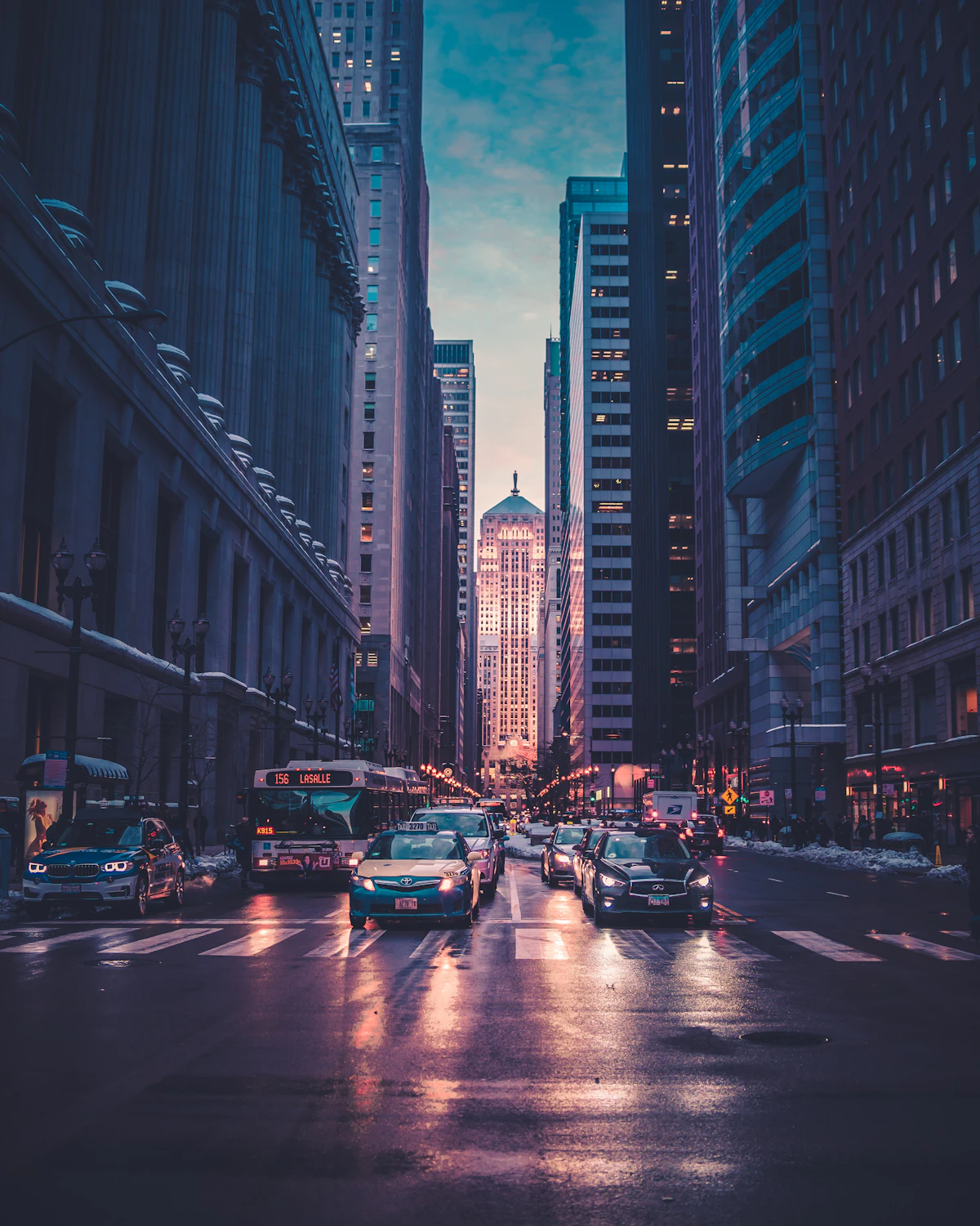
A grey symphony of ruin and resilience.
BERLIN
Berlin’s climate is a psychological endurance test, defined by long, ink-washed winters that stretch from November into a reluctant, shivering April. The sky becomes a permanent ceiling of bruised slate, pressing down on the city until the sun feels like a forgotten myth. This damp, biting cold doesn't just necessitate heavy wool coats; it forces the entire population into a communal hibernation, turning every dimly lit kneipe into a sanctuary. When the brief, frantic summer finally arrives, the humidity is replaced by a desperate, electric euphoria. People spill out onto the Landwehr Canal, shedding their winter cynicism along with their layers, desperate to soak up every photon before the grey returns. It is a city that breathes in the dark and exhales in the light, shaped entirely by the cyclical struggle against its own atmospheric weight.
The Berlin you see on Instagram is a curated fiction, a neon-lit fantasy of Berghain queues and endless brunch spots that bears little resemblance to the city’s grinding, bureaucratic reality. Tourists arrive expecting a bohemian paradise, only to find a sprawling, disjointed metropolis where the primary cultural currency is a stony-faced indifference. Neighborhoods like Neukölln, once the gritty frontier of art-student migration, are now being scrubbed clean by venture capital, leaving behind a hollow shell of artisanal coffee shops that serve twenty-somethings who never saw the Wall. The myth of 'poor but sexy' died a decade ago, replaced by a frantic gentrification that is pushing the actual soul of the city—the immigrant families and the struggling artists—to the crumbling fringes. What remains is a fascinating, scarred skeleton that requires a sharp eye to distinguish between authentic history and the sanitized aesthetic of the new global elite.
The social fabric here is stitched together by a stoic, almost aggressive sense of privacy that can feel like hostility to the uninitiated. Berliners are not rude in the American service-industry sense; they are simply indifferent to your existence, governed by an unspoken social contract that prioritizes efficiency and personal space over performative politeness. If you stand in the middle of a bike lane on Kastanienallee, you aren't just being a tourist; you are a physical obstruction to the city's frantic, daily momentum. Class tensions are palpable, simmering beneath the surface of skyrocketing rents that have turned once-marginalized areas into battlegrounds between legacy residents and the new wave of tech expats. To survive here, you must learn to navigate the silence, respect the queue, and understand that in this city, your money does not buy you a personality.
For the first-timer, three days is a standard mistake; give yourself at least six to actually grasp the city’s disjointed geography. You will likely rely on the U-Bahn and S-Bahn, which remain the city’s nervous system, though the 'AB' zone pass for $10a day is your best friend. Avoid the trap of spending your entire budget at fancy boutiques in Mitte; instead, hit the flea markets at Mauerpark on Sundays, though be prepared for crowds that border on the claustrophobic. If you are traveling solo, Berlin is one of the safest cities in Europe, provided you understand that late-night transit is as much a social space as a transport utility. Stick to the 'Späti' (corner store) culture for cheap drinks, and remember that tipping 10% is generous, not mandatory, despite what your guidebook might claim.
The true soul of Berlin hides in the places that refuse to be polished for the tourist gaze, often tucked behind nondescript grey facades or down alleyways littered with cigarette butts. Spend an afternoon at the Admiralbrücke in Kreuzberg, not for the view, but to watch the friction of a city that refuses to go to sleep. Wander the quiet, forgotten stretches of the Landwehr Canal, or duck into a dusty record shop on Pannierstraße where the owner has been curating vinyl since before the Wall fell. The city’s heartbeat isn't found in the glass-and-steel monoliths of Potsdamer Platz, but in the graffiti-stained courtyards of wedding-venue-free backstreets where the air smells of stale beer and history. This is where you find the people who actually built the modern city, far from the influence of travel bloggers or PR-driven 'hidden gems'.
Berlin is not a city that welcomes you with open arms; it is a city that dares you to find your own place within its jagged architecture. It is an exhausting, exhilarating, and frequently frustrating place that demands you leave your expectations at the baggage claim. You will come here looking for a party and perhaps leave with a newfound appreciation for the quiet, melancholy beauty of urban decay. Do not expect to love it immediately, as Berlin is an acquired taste that only reveals its true flavor once you stop trying to control your experience. You go to Berlin to lose yourself, and if you are lucky, you might just find something real in the wreckage.
The Micro-Economies of BERLIN
Kreuzberg
Centered around Oranienstraße and the canal, this is the historic heart of the city's counter-culture. It remains a dense mix of Turkish-German families, aging punks, and high-earning creatives. Accommodation here is pricey, often ranging from $150to $250per night for a decent hotel room. During the day it is vibrant and chaotic, while at night it transforms into the epicenter of the city's nightlife. A essential visit, even if you stay elsewhere.
Neukölln
Stretching south from Weserstraße, this neighborhood is the current frontier of Berlin’s rapid gentrification. It remains home to a massive immigrant population, yet the street-level vibe is increasingly dominated by trendy bars and cafes. Studios and small apartments are expensive, though hostels provide a cheaper entry point around $60a night. It is energetic and sometimes gritty, making it perfect for travelers who want the 'authentic' Berlin experience.
Prenzlauer Berg
Lined with beautiful, restored 19th-century buildings, particularly around Kollwitzplatz and Kastanienallee. It has become the bastion of wealthy families and the professional class, losing much of its former edge. It is arguably the most 'comfortable' neighborhood for tourists to stay, with rates often exceeding $200a night. It is a place to stroll, eat well, and enjoy the polished, green side of the city.
Friedrichshain
Bordered by the Spree and the Boxhagener Platz area, this neighborhood is defined by its brutalist history and its proximity to the city's most legendary clubs. It is a loud, chaotic, and youthful district that never truly sleeps. Accommodation costs are moderate, often dipping into the $100range, though the noise levels are a factor. Stay here if your itinerary revolves around nightlife and industrial history.
Wedding
Moving north from Müllerstraße, Wedding is the final frontier of affordability within the Ringbahn. It is a multicultural, working-class neighborhood that has yet to be fully colonized by luxury developments. You can find accommodation here for $80-$120a night, offering significantly better value than the central districts. It is less 'polished' and more 'real,' making it an excellent base for the adventurous traveler.
Mitte
The geographic and tourist center, encompassing Friedrichstraße and Unter den Linden. It is where you find the museums, the high-end shopping, and the government buildings. It is undeniably expensive, with luxury hotels regularly charging $300+ per night. While convenient for seeing the major attractions, it lacks the lived-in, human soul of the outer districts.
Micro-Economy & Cost Breakdown
Berlin’s public transit is a marvel of efficiency, consisting of the U-Bahn (subway), S-Bahn (suburban train), and an extensive tram network. A single AB-zone ticket costs $4, but a 24-hour pass for $11is the absolute minimum you should purchase. Avoid the temptation to use ride-shares like Uber or Bolt, which are significantly more expensive and rarely faster due to the city's complex traffic patterns. The best money-saving tip is to use the BVG Fahrinfo app, which is remarkably accurate for real-time tracking, and always validate your paper ticket at the small yellow or red boxes on the platform, or face a $65fine from the ubiquitous plainclothes controllers.
Accommodation in Berlin is a polarized market, with luxury hotels in Mitte often starting at $250per night, while budget guesthouses in Wedding can be found for $80. The sweet spot for value is usually a boutique hotel in Friedrichshain or Neukölln, where you can find characterful, central rooms for around $140. Avoid the area immediately surrounding Alexanderplatz, as it is a tourist trap characterized by overpriced, characterless hotels. Always book directly through hotel websites if possible, as the city has tightened regulations on Airbnb to protect local housing stock, making many short-term listings illegal or unreliable.
Eating in Berlin is a masterclass in global fusion, where you can spend $15for a world-class meal or $50for a mediocre experience. Skip the sit-down restaurants in the tourist hubs and head straight to a local Imbiss or a market stall in Markthalle Neun. A classic Döner Kebab or a Currywurst at a street-side stand will set you back about $7, leaving you plenty of room in your budget for a craft beer. To eat like a local, seek out the Vietnamese spots in Prenzlauer Berg or the falafel shops in Neukölln, where the value-to-quality ratio is unmatched in Western Europe.
The months of November through February are brutal, characterized by biting wind and a lack of sunlight that can dampen even the most optimistic traveler's spirit. Avoid these unless you are specifically looking for a grey, introspective atmosphere or the Christmas markets. The secret shoulder season is May and September, when the city is temperate, vibrant, and not yet overwhelmed by the peak summer rush. You need at least five full days to see Berlin; anything less is a frantic sprint through history that will leave you feeling like you barely scratched the surface of this complex, multi-layered city.
Culinary Reality
Survival Protocols
- The 'Helpful' Friend Scam:A stranger approaches you at a transit station, offering to help with the ticket machine, then demands money for the 'service.' They often operate at busy hubs like Alexanderplatz or Zoologischer Garten. Politely but firmly say 'Nein, danke' and walk away immediately. If they persist, move toward a transit guard or a crowded area.
- Validating Your Ticket:Tourists often purchase a ticket but forget to stamp it in the small machines on the platform, leading to an immediate fine. It is a common mistake that is strictly enforced by plainclothes inspectors who target confused-looking travelers. Always check the ticket for a date/time stamp; if it's blank, it's not valid. The cost is a flat $65fine, no excuses allowed.
- Sunday Silence:Berliners take their 'Ruhetag' (day of rest) very seriously, and loud behavior in residential courtyards or hallways is considered deeply rude. It stems from a post-war cultural desire for peace in the home. If you are staying in an apartment, keep the noise down to a minimum on Sundays. Locals will appreciate the respect, and you’ll avoid awkward confrontations.
- Winter Gloom:From November to March, the city experiences persistent, bone-chilling dampness that can seep into your bones. Temperatures hover near freezing, and the lack of sunlight can lead to genuine physical exhaustion. Locals cope by spending time in warm, dimly lit bars and using Vitamin D supplements. Pack high-quality thermal layers and waterproof boots, or you will regret your wardrobe choices within an hour.