




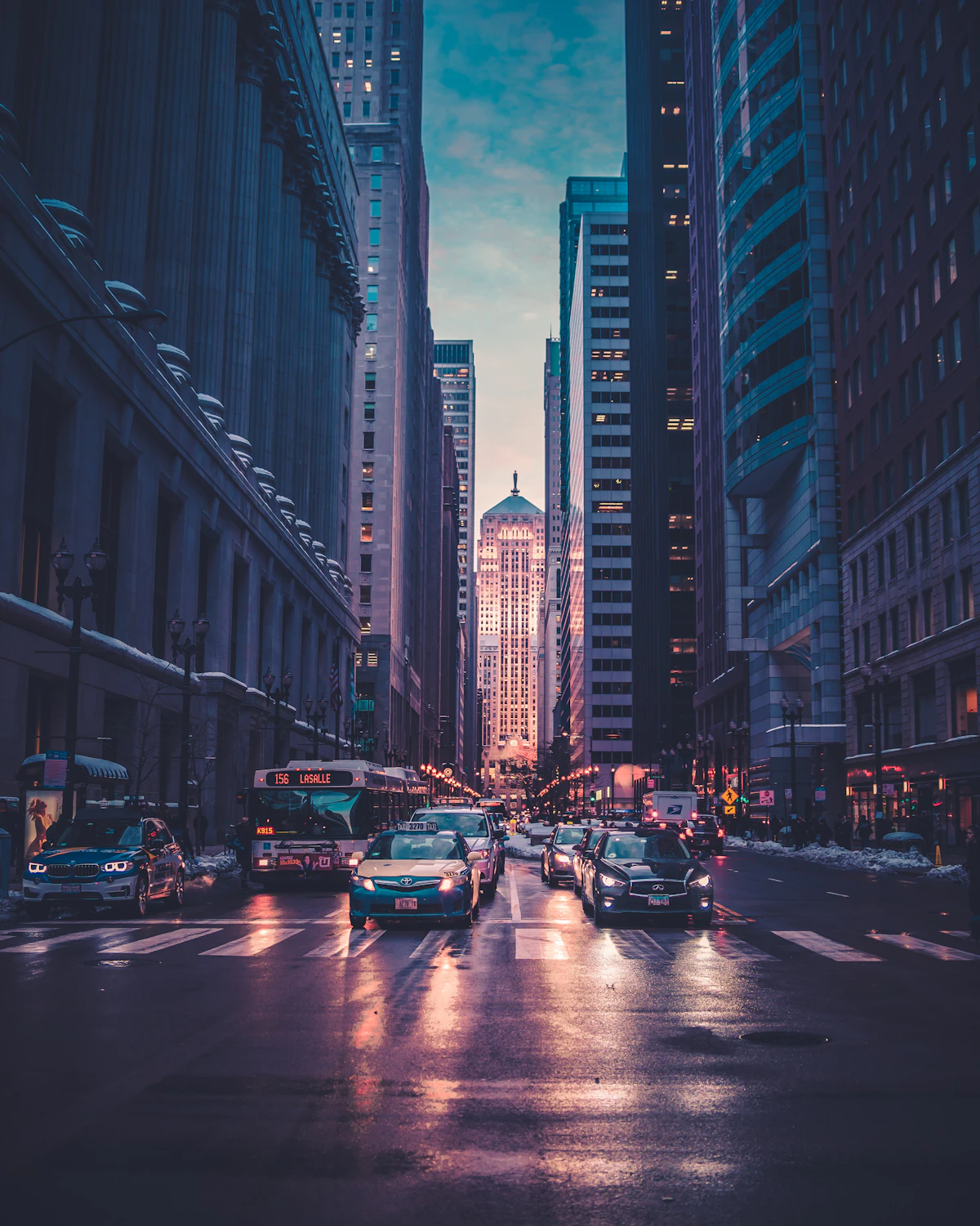
A sprawling, sun-drenched fever dream of ambition.
LOS-ANGELES
At 5:00 AM, the Grand Central Market is a cathedral of silence before the inevitable roar of the city begins. Beneath the flickering neon signs, the air is thick with the scent of roasted coffee beans from G&B and the faint, briny promise of fresh oysters. A lone dishwasher hoses down the concrete, the water reflecting a city that has not yet been asked to perform for the cameras. There is a profound, meditative stillness here, a rare pause in a town that equates movement with survival. You smell the cumin and charred peppers drifting from stalls that will soon be swarmed, but for now, the only rhythm is the hum of industrial refrigerators. It is the only time you will truly understand the sheer, tectonic scale of Los Angeles.
The myth of Los Angeles is a celluloid projection—a pristine, sun-bleached paradise where every street corner is a movie set and every stranger is a talent scout. The reality is a bruised, sprawling metropolis characterized by crushing traffic, profound economic inequality, and a relentless, grinding ambition that devours the weak. Tourists flock to the Walk of Fame, only to find a grimy gauntlet of costumed characters and souvenir shops that feel like a fever dream of cultural decay. Meanwhile, neighborhoods like Boyle Heights and Highland Park are caught in a violent tug-of-war between generational history and the encroaching tide of gentrification. The city pretends to be a monolith of wealth, but it is actually a patchwork of isolated enclaves, each struggling to reconcile its identity with the relentless pressure of urban expansion.
To navigate Los Angeles is to participate in a social dance dictated by geography and class, where your neighborhood is a shorthand for your bank account. Locals—the ones who actually hold the city together—are deeply skeptical of the transient, influencer-driven economy that threatens to turn every street into a photo backdrop. There is an unspoken rule: if you want to be liked, do not block the sidewalk to stare at a mural, and for the love of god, do not try to make small talk with a stranger in a line. The class tensions are visceral, visible in the disparity between the gated hills of Bel-Air and the tent cities lining the underpasses of the 101. Tourists consistently violate these boundaries by treating private residential pockets as public spectacles, failing to recognize that this is a city of millions living, not a stage for their vacation.
For the first-timer, the most critical lesson is that Los Angeles is not a city you visit; it is a region you negotiate, requiring at least five days to even scratch the surface. Do not attempt to stay in Hollywood; your budget and sanity are better served in pockets like Silver Lake or Culver City, where the accommodation reflects actual local life rather than a tourist trap markup. If you are traveling with family, skip the chaotic insanity of the Santa Monica Pier and head to the tide pools of Leo Carrillo State Beach instead. The best time to visit is October or November, when the oppressive heat breaks and the Santa Ana winds clear the smog for a rare, crystalline view of the mountains. Transportation is the ultimate hurdle; unless you are prepared to spend upwards of $100a day on ride-shares, you must accept that the city is a gridlock that requires careful, strategic routing.
The soul of Los Angeles does not reside on the Sunset Strip or the manicured lawns of Beverly Hills; it hides in the dusty, sun-baked corners where the immigrant experience defines the landscape. You find it on the corner of Whittier and Atlantic, where the scent of al pastor smoke signals a community that has survived decades of systemic neglect. It lives in the quiet, overgrown garden of the Peace Awareness Labyrinth & Gardens on West Adams, a place where time seems to fold in on itself. Seek out the small, family-owned bookstores in Eagle Rock or the record shops in Highland Park that haven't yet been rebranded as boutique lifestyle concepts. These spaces are the lungs of the city, and they are where the real, unvarnished spirit of the people continues to breathe.
Los Angeles is not for the passive traveler or the person seeking a clean, organized European experience. You should come here only if you are prepared to confront the beautiful, messy, and often heartbreaking contradictions of the American dream. You will lose your patience in the traffic and your money in the overpriced cafes, but you will gain a profound appreciation for the sheer audacity of human migration and reinvention. It is a place that demands you look closer, push harder, and accept that you will never truly see it all. Ultimately, Los Angeles is a mirror—it will only show you exactly what you are willing to look for.
The Micro-Economies of LOS-ANGELES
Silver Lake
Centered around Sunset Boulevard and Hyperion, this neighborhood is the epicenter of creative class gentrification. It’s a mix of legacy artists and tech-adjacent professionals, with boutique hotel rooms often exceeding $350a night. The vibe is aggressively curated by day and hollowed out by quiet exclusivity at night. You should visit for the independent coffee shops, but staying here feels like participating in a lifestyle brand simulation.
Boyle Heights
Bounded by the 5 and 60 freeways, this is the historic heart of the Chicano movement, defined by Whittier Boulevard. It is a working-class neighborhood where families have lived for generations, and the cost of living remains lower, though development is encroaching. The vibe is authentic, gritty, and fiercely protective of its culture. Visit for the best street food in the city, but respect the community and leave the tourist mindset at the door.
Culver City
Once a sleepy studio town, the area around Washington Boulevard and Main Street is now a polished, corporate-friendly tech hub. It features a high concentration of luxury apartments and expensive, polished dining options starting at $200per night for lodging. It is clean, safe, and utterly lacking in the chaotic charm of the Eastside. It’s an ideal base for families seeking convenience, but it is not the place to find the city's raw soul.
Highland Park
Centered on York and Figueroa Streets, this neighborhood is in the final stages of a rapid, intense transformation. It’s a collision of longtime residents and young professionals, with prices for vintage finds and craft cocktails climbing daily. The weekends are packed with strollers and hipsters, creating a frantic, buzzy energy. It’s worth a visit for the local music scene and the record stores, but the authentic grit is fading fast.
Koreatown
Stretching along 6th Street and Wilshire, this is one of the few places in LA that never truly sleeps. The area is a dense, high-energy mix of luxury high-rises and cramped, vibrant immigrant businesses. Hotel prices are erratic, ranging from $150to $400, reflecting the intensity of the district. Stay here if you want to be in the middle of a 24-hour cycle of karaoke and world-class BBQ.
Venice
The intersection of Abbot Kinney and the beach is a masterclass in global commercialization. It’s a mix of extreme wealth and the city's most visible homelessness, creating a jarring, uncomfortable juxtaposition. Accommodation here is exorbitantly priced, often over $500for a night in a converted bungalow. Visit once for the spectacle of the boardwalk, then retreat immediately to avoid the suffocating tourist density.
Micro-Economy & Cost Breakdown
Transit in Los Angeles is a test of patience, relying on a sprawling Metro rail system that is improving but still fails to cover the vast majority of the city. While the E Line is convenient for getting from Downtown to Santa Monica, most of the city remains inaccessible without a car, leading to heavy reliance on Uber and Lyft. Budget roughly $40–$60per day for ride-shares if you aren't renting a vehicle, and expect to spend hours of your trip sitting on the 405 or the 10. A money-saving tip: use the Tap app to load a day pass for $5, which covers the entire Metro system, and plan your days by neighborhood to minimize travel time.
Accommodation in Los Angeles is wildly inconsistent, with a budget room in a questionable motel starting at $150and luxury stays in West Hollywood or Santa Monica easily hitting $700per night. For the best value, look for boutique hotels along the border of Silver Lake or Echo Park, where you can find character-filled rooms for $250. Avoid AirBnBs in residential neighborhoods, as they are often illegal and contribute to the displacement of locals. The sweet spot for value is booking a hotel in Culver City or Mid-City, which provides central access to both the beach and the mountains without the inflated cost of a beachfront address.
Food economics in Los Angeles are defined by the gap between $15taco truck meals and $300tasting menus in Beverly Hills. To eat like a local, seek out the taco trucks parked on Atlantic Boulevard or the pupuserias in Westlake, where a filling, life-changing meal costs less than $15. Avoid the restaurants clustered around the Santa Monica Pier or the Hollywood Walk of Fame, as they are overpriced traps that rely on high turnover rather than quality. If you want a great meal, head to the strip malls of the San Gabriel Valley for authentic Szechuan or noodle houses that define the city's culinary brilliance.
Avoid visiting in July and August, when the heat is stifling, the marine layer traps pollution, and the crowds are at their absolute peak. The secret shoulder season is mid-October to early November, when the weather is perfect for hiking and the city feels noticeably less frantic. You need at least five full days to see the city properly, though a week is preferable to allow for the inevitable time lost to traffic. Do not attempt to pack too much into a single day; the geography is too vast to treat this like a walkable European capital.
Culinary Reality
Survival Protocols
- The 'Hollywood Star' Scam:Street performers on the Walk of Fame will force a CD or photo on you, then demand a 'donation' of $20or more. They operate in groups and rely on intimidation to get tourists to pay up. Simply refuse to take anything from their hands and keep walking with purpose.
- The Metro Rail Confusion:Tourists often mistake the light rail for a subway that covers the whole city, then find themselves stranded in areas with no transit connections. The cost of a failed transit plan is an expensive and frustrating Uber ride back to your hotel. Always double-check your final destination's distance from the nearest station before boarding.
- The 'LA Cool' Boundary:Tourists often try to engage in overly familiar conversation with service staff or locals in quiet coffee shops. It's seen as an invasion of the 'privacy bubble' that people build to cope with the city's density. Be polite, be brief, and observe how the locals interact before inserting yourself.
- The Marine Layer Surprise:Even in the middle of summer, the coast can be overcast and chilly until the afternoon. Tourists often dress for a tropical paradise and end up shivering in the fog. Bring a light layer, as the temperature difference between the beach and the inland valleys can be as much as 15 degrees.