




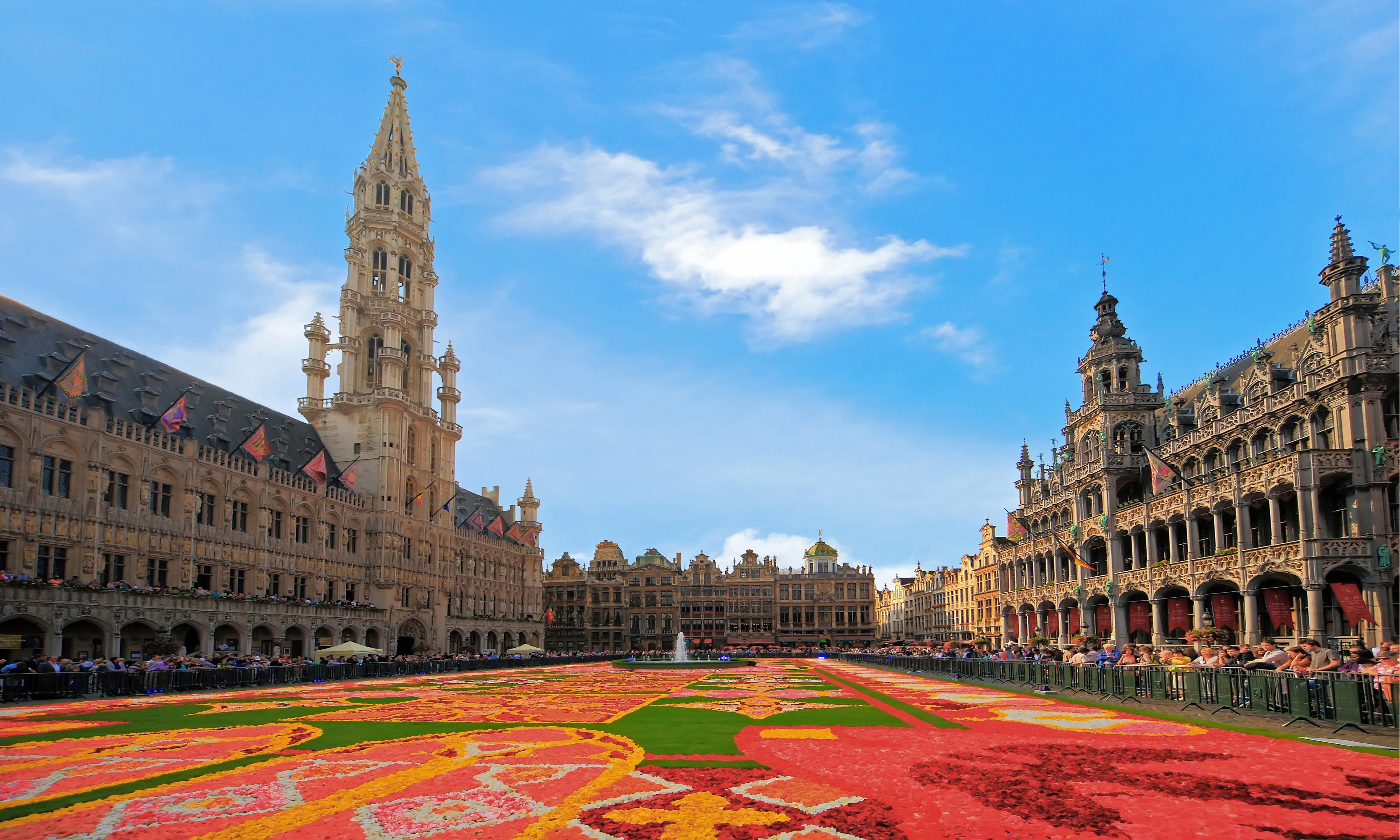
Where baroque grandeur meets anarchic, surreal charm
BRUSSELS
In the narrow, cobblestoned veins of the Ilot Sacré, the air hangs heavy with the sweet, yeasty musk of simmering moules and the sharp, caramelized scent of sugar-dusted waffles. Tucked away from the frantic rush of tourists, the rhythmic clink of porcelain on marble tables rings out from the corner bistros. Above the din, the distant chime of the Saint-Nicolas church bells cuts through the damp air. You can hear the low, melodic hum of French conversations flowing into the Flemish tongue as locals navigate the slick stones. It is a humid, rich atmosphere that feels caught somewhere between a medieval guildhall and a modern jazz club.
Solo travelers should head directly to the Matonge district, where the energy is authentic and the community is welcoming. Secure a seat at a communal table at a café on Rue de la Paix to avoid the isolation of solitary dining. Use the STIB-MIVB network's contactless payment system, which works instantly on all trams and buses. For a quiet afternoon, browse the independent presses at Peinture Fraîche in Ixelles. Keep your belongings close, but don't let hyper-vigilance distract you from the vibrant street art murals that define this neighborhood.
Couples seeking intimacy should bypass the crowded Grand Place and retreat to the lush, winding paths of the Tenbosch Park. Afterward, book a table at a quiet, wood-paneled estaminet like A La Bécasse, where the low ceilings and cherry beer offer a cozy, timeless respite. Stroll the tree-lined avenues of the Sablon district, specifically Rue de la Régence, to find high-end antique shops and artisan chocolate boutiques. For a romantic evening, walk through the Parc de Bruxelles as the golden lamps flicker on at dusk. Always carry a small umbrella, as the Brussels drizzle is an unpredictable but frequent companion.
Reaching Brussels is seamless via the Eurostar train, which deposits passengers directly into the subterranean halls of Bruxelles-Midi station. From there, hop on a local 'S' train for a quick six-minute connection to Bruxelles-Central, placing you in the historic core. If arriving at Brussels Airport, the airport train departs every ten minutes and costs approximately 10 euros for a one-way ticket. Avoid taking private taxis from the airport, as they are significantly more expensive than the train service. Once inside the city, walking is your best option, as the city center is surprisingly compact.
As you depart, the memory of the city will be tied to the smell of wood-smoke and roasting coffee beans. You will find yourself craving the specific, vinegary tang of a cone of frites eaten in the rain. It is the lingering scent of damp limestone and rich, dark chocolate that ultimately anchors the experience. This is the enduring, complex flavor of a city that never stops brewing.
TOP ATTRACTIONS
Musée Magritte
Located on Place Royale, this museum houses the world's largest collection of the surrealist master René Magritte. Tickets cost 10 euros and provide a deep dive into the pipe, the bowler hat, and the blue sky. It is best to book your entry slot online at least 48 hours in advance. The minimalist architecture perfectly frames the dreamlike quality of the paintings within.
Cantillon Brewery
Found on Rue Gheude, this is the last authentic producer of traditional lambic beer in the city. A self-guided tour with tasting costs approximately 12 euros and allows you to walk through the original 1900s fermentation equipment. Be prepared for the pungent, barnyard smell of wild yeast, which is the hallmark of true gueuze. It is a gritty, industrial, and utterly essential pilgrimage for any beer enthusiast.
The Sablon District
This neighborhood is the center of the city's antique and chocolate trade, centered around the Place du Grand Sablon. You will find the flagship stores of world-famous chocolatiers like Pierre Marcolini. Spend an hour browsing the weekend market stalls where vendors sell everything from vintage lace to silver trinkets. It offers a quieter, more sophisticated contrast to the tourist-heavy areas nearby.
The Atomium
Standing at the northern edge of the city, this relic of the 1958 World's Fair offers panoramic views from its top sphere. Entrance is 16 euros and includes access to various scientific and art exhibits inside the interconnected tubes. Take the metro line 6 to the Heysel stop to arrive directly at the base of the structure. The view from the top is spectacular, capturing the full scale of the Belgian landscape.
Culinary Reality
Survival Protocols
- Language Etiquette:Brussels is officially bilingual, but French is the dominant language in daily interaction. Start your interactions with a polite 'Bonjour' before switching to English. Most locals will appreciate the effort even if they are perfectly fluent in your language.
- Tipping Culture:Tipping is not mandatory in Belgium as service is included in the bill. However, rounding up to the nearest few euros is a kind gesture for exceptional service. Do not feel pressured to leave a standard 20% tip as you would in North America.